
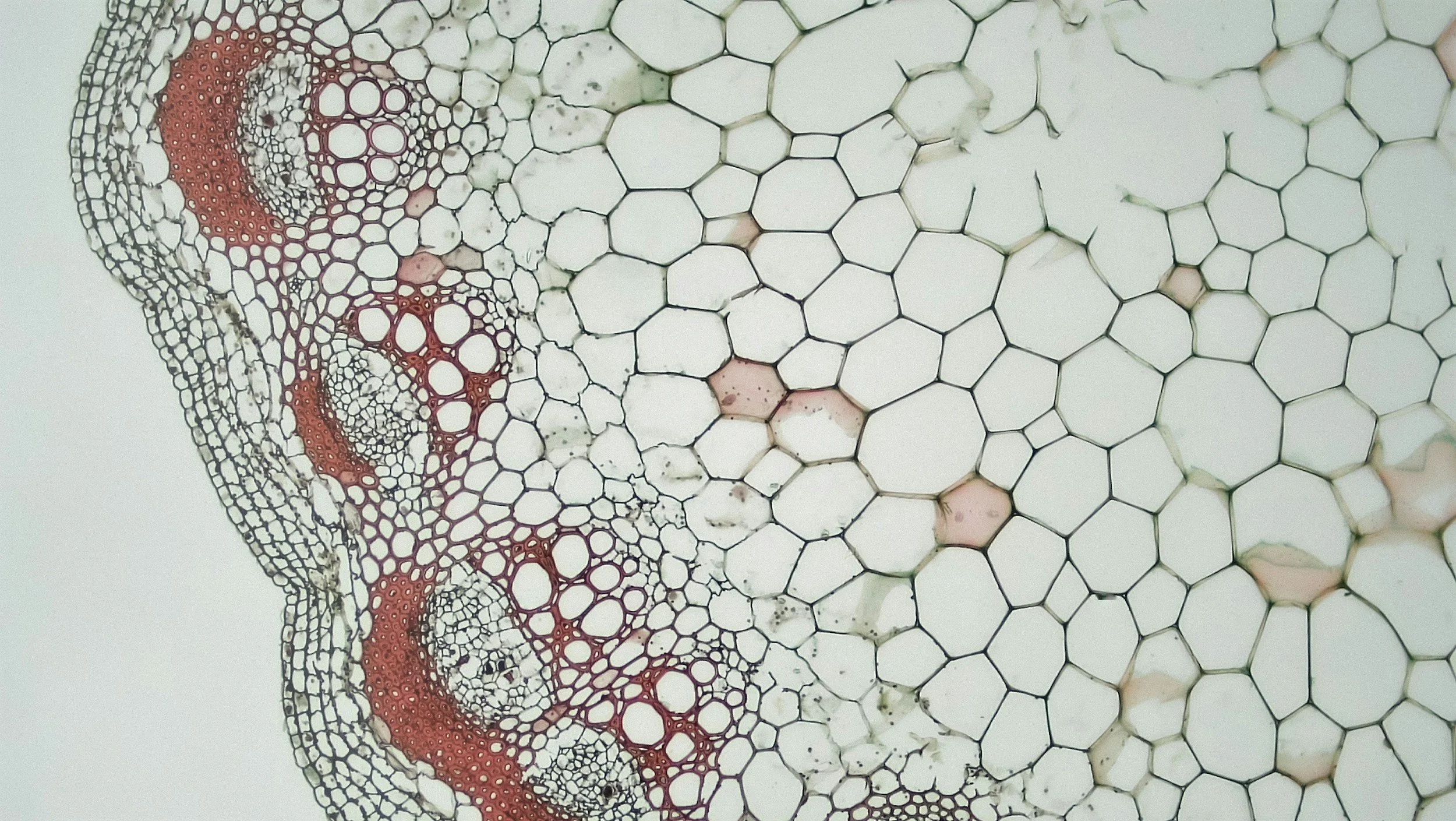
UC-MSCs
UC-MSCs (Ubilical cord-derived mesenchymal stem cells) are multipotent cells obtained from umbilical cord tissue—Wharton's Jelly. Beyond their ability to differentiate into multiple cell types, their primary value lies in how they can influence the body’s natural repair processes.
They play a key role in regenerative medicine by modulating inflammation, supporting tissue repair through paracrine signaling, and releasing exosomes that deliver growth factors, proteins, and RNA to damaged areas. This signaling helps coordinate healing at the cellular level.
Additionally, UC-MSCs are known for their low immunogenicity, making them well-suited for allogeneic applications with a favorable safety profile.
As research continues to advance, these cells are helping shift the focus of medicine from symptom management to restoring structure and function.
-
What our data shows:
1. Verified Mesenchymal Cell Profile
Flow cytometry confirms:
CD73+, CD90+, CD105+
CD45−, CD34−This aligns with ISCT criteria for mesenchymal stem cell phenotype
Why it matters:
You’re not relying on assumptions—this is phenotypic confirmation of mesenchymal cells, not just “tissue claims.”
2. High Cell Viability
~92% viability
Well above industry minimumsWhy it matters:
Higher viability = greater likelihood of biologic activity at time of use
3. High Cell Count
~42 million cells per mL (lab quantified)Why it matters:
Many products don’t quantify cell populations at all—this gives you a measurable biologic payload
4. Robust Safety Testing
14-day sterility: No growth
Endotoxin: Within safe limits
Full donor screening: HIV, Hep B/C, HTLV, Syphilis, etc. → Non-reactiveWhy it matters:
This meets expectations for patient safety and clinical confidence
5. Bioactive Growth Factor Profile
Includes:
VEGF (angiogenesis)
PDGF (tissue repair)
TGF-β1 (cell signaling)
FGF-2, EGF (healing support)
IL-1RA (anti-inflammatory)Why it matters:
You’re delivering a biologically active environment, not just structural tissue
This is not being positioned as a drug or cure—It is a biologic support matrix that may assist in reducing inflammation, supporting tissue healing, and enhancing the local regenerative environment.
Especially relevant for orthopedic applications, spine procedures, and soft tissue injuries.
If you’re looking for a well-documented, compliant biologic with transparent data—not hype—this is worth evaluating in your protocol.
-
Multilineage-Differentiating Stress-Enduring (MUSE) cells are a specialized population of stem cells recognized for their unique combination of stress tolerance, self-renewal, multilineage differentiation potential, and regenerative signaling.
Our umbilical cord–derived MUSE stem cells are sourced from donated umbilical cord tissue and represent a MUSE-enriched cellular product designed for regenerative medicine research and applications.
Unlike conventional mesenchymal stem/stromal cell populations, MUSE cells have demonstrated the ability to differentiate into cells representing all three germ layers—ectoderm, mesoderm, and endoderm. Research also suggests that MUSE cells possess an intrinsic ability to respond to signals associated with tissue injury and may contribute to tissue repair through a combination of cellular differentiation, paracrine signaling, and immunomodulatory activity.
MUSE cells are particularly interesting for regenerative medicine because of their reported ability to tolerate stressful cellular environments and maintain functional activity under conditions that may be challenging for other cell populations. Preclinical research has investigated their potential across a broad range of regenerative applications, including musculoskeletal, cardiovascular, neurologic, and tissue-repair models.
Key Characteristics
Umbilical cord–derived cellular source
MUSE-enriched stem cell population
Associated with SSEA-3 and CD105 expression in established MUSE-cell characterization
Demonstrated multilineage differentiation potential
Stress-enduring properties that may support cellular function in challenging environments
Studied for tissue-homing and injury-responsive behavior
Potential regenerative activity through paracrine and immunomodulatory signaling
Supported by a growing body of preclinical and translational research
MUSE cells represent an emerging area of cellular research and are being investigated for their potential role in supporting tissue repair, cellular signaling, and regenerative processes.
Product
Stem Cells: Super Vesicle Wharton’s Jelly
20 million | 1 ml
40 million | 1 ml *higher concentration
MUSE Stem Cell Combo
20 million MSCs + 5 million MUSE Cells | 1 ml
(Our Most Popular Option)
BioScaffolding
1 cc BioScaffolding Matrix
2 cc BioScaffolding Matrix
*A supportive three-dimensional matrix designed to complement regenerative therapies: cellular attachment • localized signaling • tissue remodeling • regenerative applications
We offer highly competitive pricing and special considerations for first-time buyers to make it easier to experience our products’ benefits.